
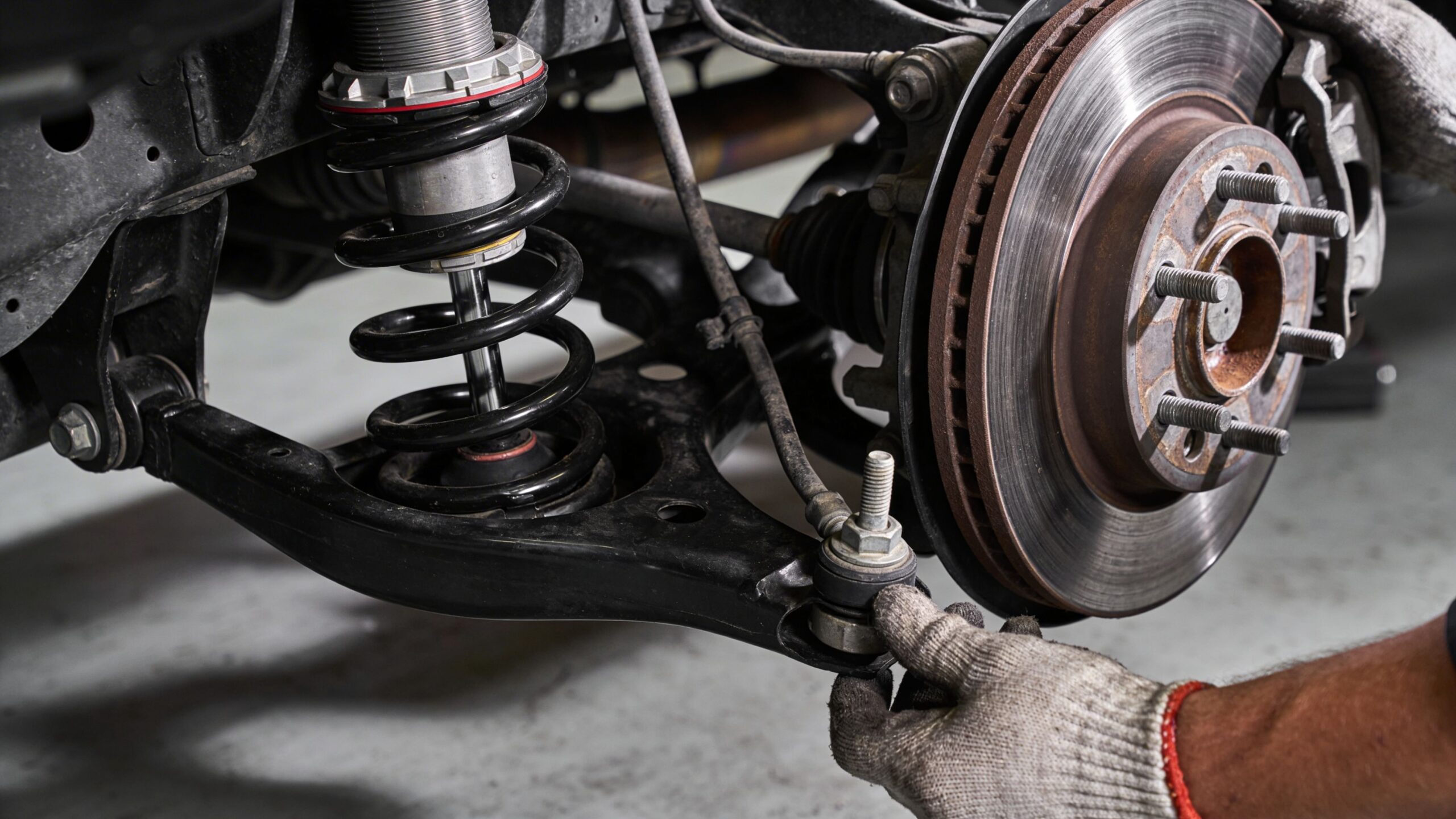
Suspension maintenance is what keeps your truck riding smooth, stable, and in control no matter where the road—or trail—takes you. It’s the system working behind the scenes to absorb bumps, support heavy loads, and maintain proper contact between your tires and the ground. Whether you’re towing, hauling, or navigating rough terrain, a well-maintained suspension transforms a harsh, unpredictable ride into one that feels balanced, responsive, and confident. But over time, components like shocks, struts, bushings, and springs wear down, gradually affecting handling, comfort, and safety. On Truck Streets, this section is built to help you stay ahead of those changes with clear, practical guidance you can trust. You’ll find insights on spotting early warning signs, maintaining optimal ride quality, and choosing the right components for your driving demands, so your truck stays planted, controlled, and ready to handle every mile with strength and precision.
A: Excessive bouncing, nose-diving during braking, fluid leaks, and a floaty ride are common warning signs.
A: Yes, worn shocks, bushings, ball joints, and alignment-related issues can all create uneven tread wear.
A: Common causes include worn sway bar links, bushings, ball joints, or loose suspension hardware.
A: In many cases yes, because replacing suspension parts can affect wheel angles and tire tracking.
A: Worn suspension parts, loose steering components, poor alignment, or tire issues are all possible reasons.
A: Absolutely, because extra weight and movement put more stress on springs, shocks, bushings, and joints.
A: Not always, but shocks, tires, tire pressure, and worn bushings are all common contributors.
A: Waiting too long to inspect small noises, looseness, or uneven tire wear until the problem grows larger.
A: Yes, many visual checks are DIY-friendly, but deeper diagnosis should be done carefully and safely.
A: It may be normal under load, but worn springs, heavy payloads, or suspension fatigue can also be the cause.