
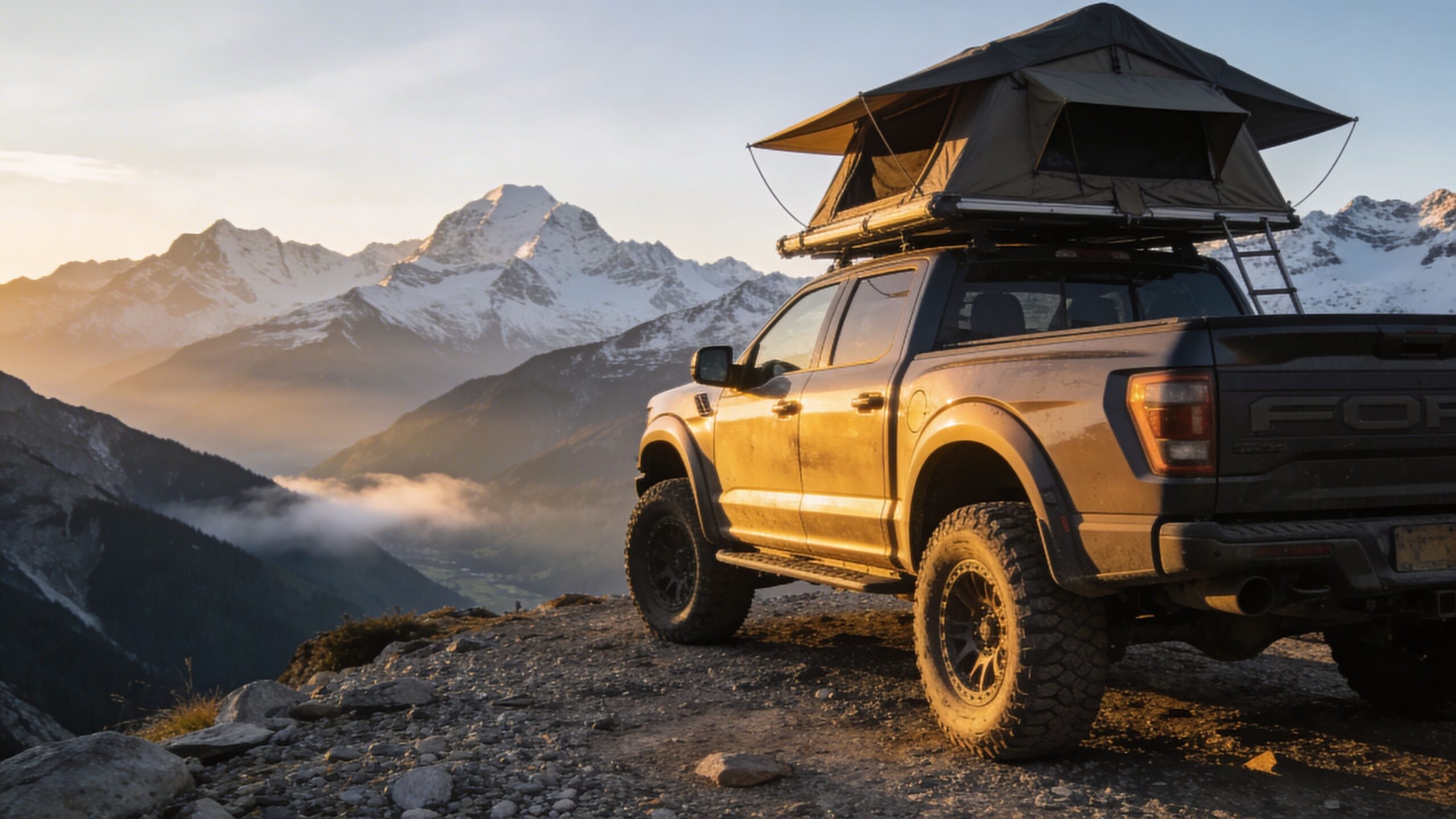
Outdoor & Adventure Trucks is where pavement ends and possibility begins. On Truck Streets, this sub-category is built for drivers who see their truck not just as transportation, but as a launchpad into the wild. Whether you’re climbing toward alpine trailheads before sunrise, navigating desert backroads under open skies, hauling kayaks to hidden lakes, or building the ultimate overland setup for multi-day escapes, capability matters as much as curiosity. This is where performance meets freedom. Here you’ll find in-depth guides on off-road trims, suspension upgrades, all-terrain and mud-terrain tire strategies, rooftop tents, bed racks, towing for outdoor toys, and real-world comparisons designed for dirt, snow, sand, and rock. We focus on traction, clearance, reliability, storage solutions, and the kind of modifications that transform a stock truck into an adventure-ready machine. If your weekends are measured in trail miles instead of traffic lights, and your gear list is as important as your playlist, you’re in the right place. Outdoor & Adventure Trucks is your roadmap to going farther, higher, and deeper into the experience.
A: Tires matched to terrain and load—then a recovery plan. Traction and safety beat “cool” mods.
A: A/T is quieter and better on-road; M/T shines in deep mud but can be noisy and wear faster.
A: Sometimes, but the wrong lift can hurt handling. Clearance and tire size help—do it to match your terrain.
A: It depends on tire, load, and terrain. Lower pressure increases traction but risks bead loss—go conservatively and reinflate for speed.
A: Not always. Many trips are solved with traction boards, a strap, and good driving—but a winch adds margin for remote travel.
A: High center of gravity—reduce speed, pack heavy gear low, and ensure suspension matches the added constant weight.
A: Use offline maps and bring a backup. Batteries, heat, and no-signal areas make redundancy smart.
A: Smooth throttle, correct gearing, and avoiding wheel hop—driver technique prevents most breakage.
A: Downshift early and brake in controlled intervals—heat management is the goal.
A: Tires, wheels, lug torque, suspension bolts, leaks, and skid plates—catch issues before the highway drive home.