
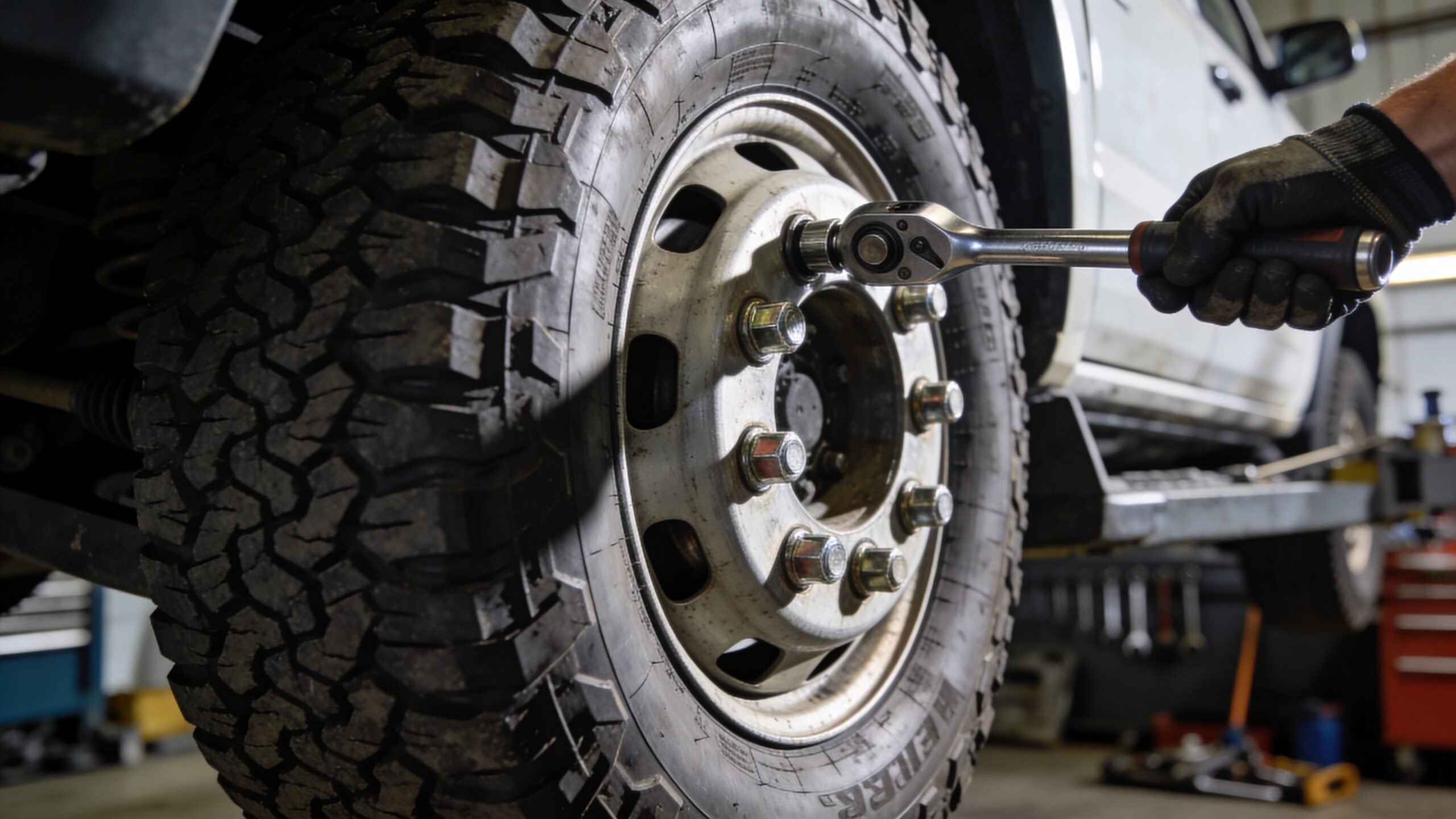
Tire care and rotation are where traction, safety, and performance meet the road, shaping how your truck handles every mile. Your tires are the only point of contact between your vehicle and the ground, carrying heavy loads, absorbing impacts, and gripping through changing terrain and weather conditions. Without proper care, uneven wear, reduced traction, and unexpected blowouts can quickly turn a smooth drive into a costly problem. But with consistent rotation, pressure checks, and tread monitoring, you can extend tire life, improve fuel efficiency, and maintain confident handling in every situation. On Truck Streets, this section is built to give you clear, practical insights into keeping your tires in peak condition, whether you’re navigating city streets, job sites, or off-road trails. From understanding rotation patterns to spotting early signs of wear, these articles help you stay ahead of issues and keep your truck planted, stable, and ready for whatever the road throws your way.
A: It depends on the truck and tire setup, but following the maintenance schedule is the best baseline.
A: Steering, braking, alignment issues, and inflation problems are all common reasons.
A: Yes, poor alignment can cause rapid and uneven tread wear in a surprisingly short time.
A: Yes, because TPMS is helpful, but manual checks are still important for accuracy and routine monitoring.
A: Common causes include tire balance issues, uneven wear, wheel damage, or suspension problems.
A: Not at all—alignment, shocks, steering parts, and inflation often play a big role.
A: Yes, because rotation is meant to prevent uneven wear before it becomes obvious.
A: Absolutely, because added load and heat can wear tires faster, especially on the rear axle.
A: Ignoring pressure and rotation intervals until uneven wear or poor traction becomes impossible to miss.
A: Replace them when tread gets too low, damage appears, or age and cracking begin to compromise safety.